Canopy Cover Requirements for Development in BoroondaraMinimum Canopy Cover Under Clause 52.37

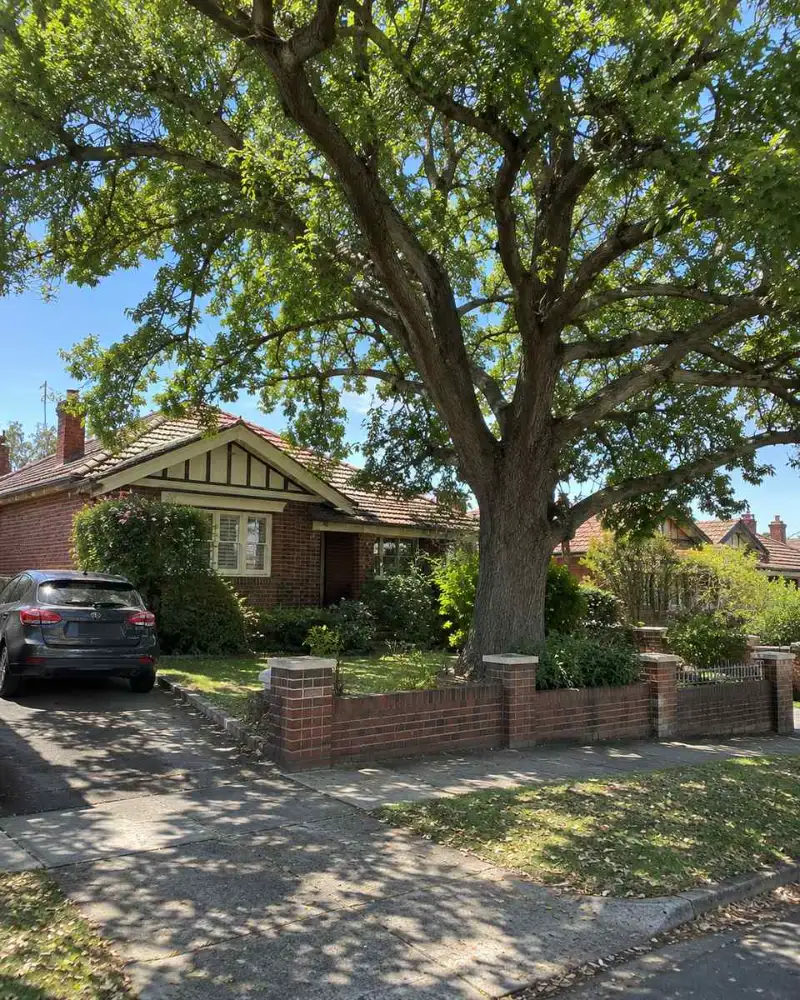
Large oak shading the front garden of an interwar brick bungalow with a brick front fence

Where an application is made under Clause 52.37, the canopy trees on the site should achieve a minimum canopy cover based on site area: 10% for sites of 1,000 m² or less, 15% for sites over 1,000 m² up to 1,500 m², and 20% for sites over 1,500 m².

We assess existing canopy, canopy to be removed and the realistic contribution of new planting, so canopy and planting constraints are addressed while the design can still change.

  • AQF Level 5 Consulting Arborists
  • QTRA & TRAQ Qualified
  • 32+ Years’ Experience
  • Fast-Track Report Turnaround
Large oak shading the front garden of an interwar brick bungalow with a brick front fence

How Much Canopy Cover Is Required?

Site areaClause 52.37 canopy cover requirement
1,000 m² or less10% of site area
More than 1,000 m² to 1,500 m²15% of site area
More than 1,500 m²20% of site area. If existing canopy cover is already more than 20%, the requirement is 20% plus half of the existing cover above 20%

Example: a 2,000 m² site with 30% existing canopy cover needs 25% (20% plus half of the extra 10%).

Earlier applications and approvals may be subject to transitional provisions. Send the original lodgement and permit dates so we can identify the applicable version of the rules. See the Clause 52.37 guide.

When Does This Requirement Apply?

These figures are the Clause 52.37 requirement for applications made under that clause, such as an application to remove a canopy tree. They are not a universal target for every development application.

Housing proposals also have their own tree canopy standards in the residential development provisions (Clauses 54, 55 and 57). VC315 aligned these with Clause 52.37, but they are separate standards, assessed as part of the development application.

What Counts Towards Canopy Cover?

  • Existing canopy trees: their whole canopy counts, even where it extends beyond the site boundary.
  • New canopy trees: the canopy within the site counts, plus any part overhanging a public road or public open space.
  • A new canopy tree must be expected to reach at least 6 m in height and a 4 m canopy at maturity.
  • The requirement can be met by retaining existing trees, planting new ones, or both.
  • Canopy over or below an existing or proposed building on the site is included under the clause's counting rules.
  • At least one existing or new canopy tree is to be located within the front setback. The clause makes an exception where one retained existing canopy tree outside that setback meets the entire minimum canopy-cover requirement.

How We Calculate Canopy

  • Existing canopy measured from survey and site inspection.
  • Canopy proposed for removal and canopy retained.
  • Projected canopy from new planting, using realistic mature sizes.
  • Overlapping canopy counted once, as the applicable canopy standard requires.
  • Assumptions and assessment date shown so designers and Council can follow the figures.

Choosing Replacement Trees

Species, mature crown size, deep soil, setbacks and services all decide whether proposed canopy can actually be achieved. A planting schedule only works if the site can support the trees.

What to Send for a Quote

  • Property address and feature survey.
  • Architectural and basement plans.
  • Landscape plan.
  • Any Council request for further information.

Boroondara Case Study: Report Recommendations

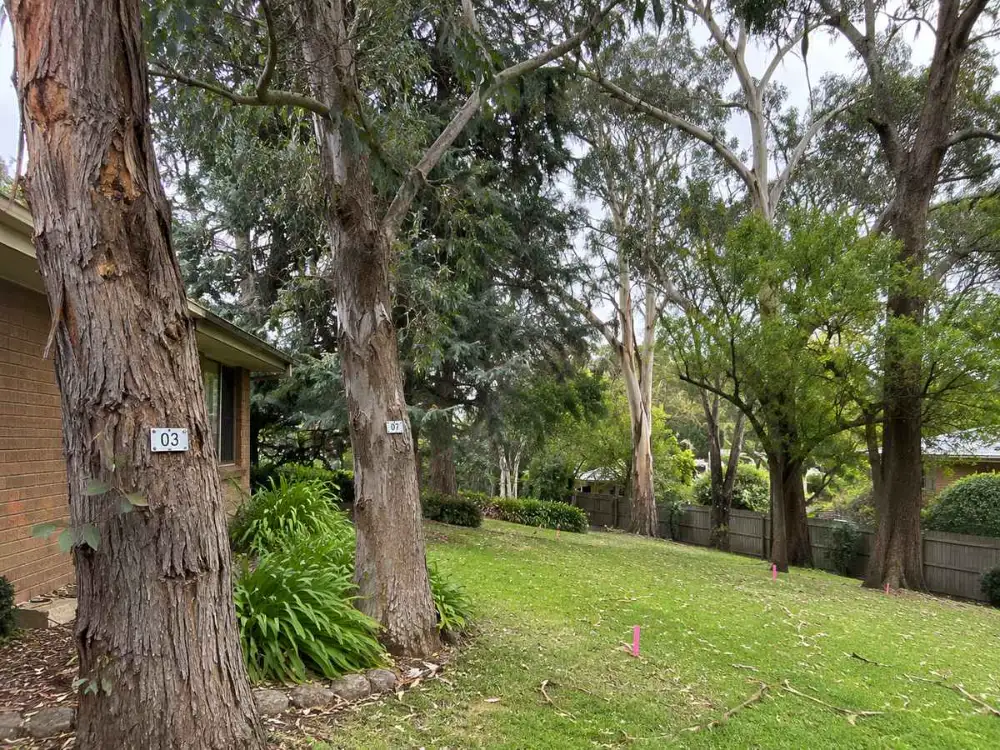
Sloping back yard with numbered tags on established eucalypt trunks and pink survey pegs in the lawn beside a brick home (illustrative image)Illustrative image only. Not a photograph of this project.
01

Kew East: Elm Grove

Arboricultural Impact Assessment for a residential development. 15 trees assessed, including two Sugar Gums of about 18 m and 20 m. 12 trees recommended for retention and protection, 3 lower-value trees for removal, with protection fencing, neighbouring-tree consideration and Project Arborist supervision.

Why it's relevant: if your site has large established eucalypts or trees on neighbouring land, an AIA identifies the constraints before design is fixed.

This summarises our report's recommendations. It does not claim a Council decision or completed works.

Who Prepares Your Report?

Our Boroondara reports are prepared by the Arbor Express consulting team, led by Robert de Jong, Principal Arborist (Diploma of Arboriculture, AQF Level 5; QTRA Qualified Practitioner; 32+ years in arboriculture). The team includes Director Alex de Jong (AQF Level 5) and arborists Matthew Bunting-Frame and Patrick Mortell. Each report names the arborist responsible for it. We also carry out professional tree removal and pruning. Fast-track refers to our report turnaround; Council assessment times are set by Council.

About our company

What Our Clients Say

Google reviews from Arbor Express clients.

“Robert and Arbor Express were very helpful and professional in helping me deal with identifying a large dangerous tree which needed to be removed. I highly recommend Arbor Express.”

Ian BlatchGoogle review for Arbor Express

“Alex and his team helped me finalise my DA by doing root mapping and an arborist report. Alex exemplifies quality, and I loved his work so much I will have him as my project arborist for my build.”

E. P.Google review for Arbor Express

“Thank you Arbor Express! Alex and Rob were able to deliver a high quality arborist report in a timely manner that received council approval. Would highly recommend!”

Arthur BoardmanGoogle review for Arbor Express

“Very quick, efficient and thorough. Arbor Express filed the report directly with our local Council, fees included, which meant we could have the dangerous tree removed within a week. Well worth the money.”

Annette GreerGoogle review for Arbor Express

“Robert was easy to deal with, arrived at the appointed time and provided a completed report within days of the initial inspection. Excellent service.”

Linda NoyceGoogle review for Arbor Express

“I am very happy to provide a review of Arbor Express. I was very happy with Robert’s work and the comprehensive report he provided. Thank you Robert and team.”

Murray RankinGoogle review for Arbor Express

“Very quick and professional service. They even offered to provide a report over the Easter holiday, so impressive commitment to customer service.”

Paul SidwellGoogle review for Arbor Express

“Arbor Express provides professional reports and follow up advice. Their friendly attitude makes understanding the process regarding neighbourhood disputes easy. Highly recommend”

Stacey SouthGoogle review for Arbor Express

“A complex matter involving several large council-owned gum trees adjacent to my property … his advice was balanced and evidence-based, and the report was not exaggerated or one-sided.”

J WGoogle review for Arbor Express

Frequently Asked Questions

Does new planting immediately replace mature canopy?

No. Projected canopy depends on growth and site conditions, which is why realistic mature sizes matter.

Can canopy be counted over a basement?

Canopy can extend over buildings or structures under Clause 52.37's counting rules. That is separate from the planting test: a new tree still needs compliant deep soil or a suitable planter, so a basement cannot simply be treated as natural rooting space.

Can I keep existing trees to meet the requirement?

Yes. Retained canopy trees count towards the requirement, which is often the most cost-effective approach.

Does every development need 10–20% canopy?

No. These are Clause 52.37 requirements for applications under that clause. Housing developments are assessed against their own residential tree canopy standards.

Need a Canopy Cover Assessment in Boroondara?

Send the survey, architectural plans and landscape plan for a canopy assessment quote.

Call NowGet a Free Quote